

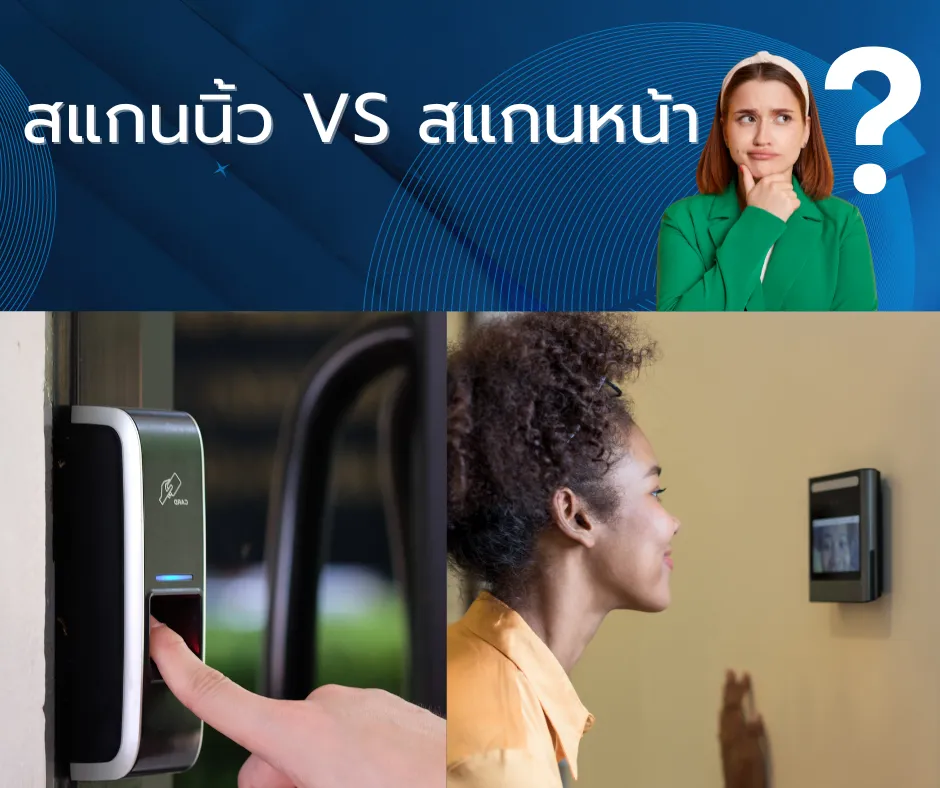
In the digital age, security has become essential, and biometric identity verification has grown very popular. The most common technologies are fingerprint scanning and face scanning. But which is better? This article answers that question.
Strengths of face scanning: convenient, fast, touch-free
- Convenient and fast: just turn to face the scanner and the system verifies your identity in a fraction of a second, with no touching. This suits the New Normal, which calls for less contact.
- Easy to use: there is no need to remember passwords or carry anything. Your face is enough.
- Secure: modern face scanning is highly accurate and hard to fake.
- Works with face masks: the latest technology can scan faces even with a mask on.
- Versatile: suitable for building access control, controlling the use of electronic devices, payments and much more.
Weaknesses of fingerprint scanning: limits and exposed prints
- Less convenient: you must touch the sensor, which may not suit situations such as wet, dirty or injured hands.
- Accuracy: unclear prints, such as faded fingerprints, can cause problems.
- Security: fingerprints can be forged more easily than faces.
- Hygiene: frequently touching a fingerprint sensor can risk spreading germs.
From this comparison, face scanning is more convenient, faster, safer and easier to use than fingerprint scanning, and suits a modern lifestyle.
However, both technologies have different limits and advantages. Which one to choose depends on your needs and context.